Kaikoura Whales By Month: What You Can See And When
Updated November 2, 2026
Sperm whales feed off Kaakoura every month of the year, which is why the town can run whale watching trips in all seasons. The rarer species, humpbacks, orcas, pilot whales and southern right whales, each have their own window, and matching your travel dates to that window is the difference between a good trip and a great one.
Short answer
Sperm whales are resident off Kaikoura all year, so any month can work. Orcas are reported most often from November to March, dusky dolphins are present year-round with a spring rest period, and humpback and southern right whales pass through on migration. The operator reports a sighting success rate over 90%, with an 80% refund if no whale is seen.
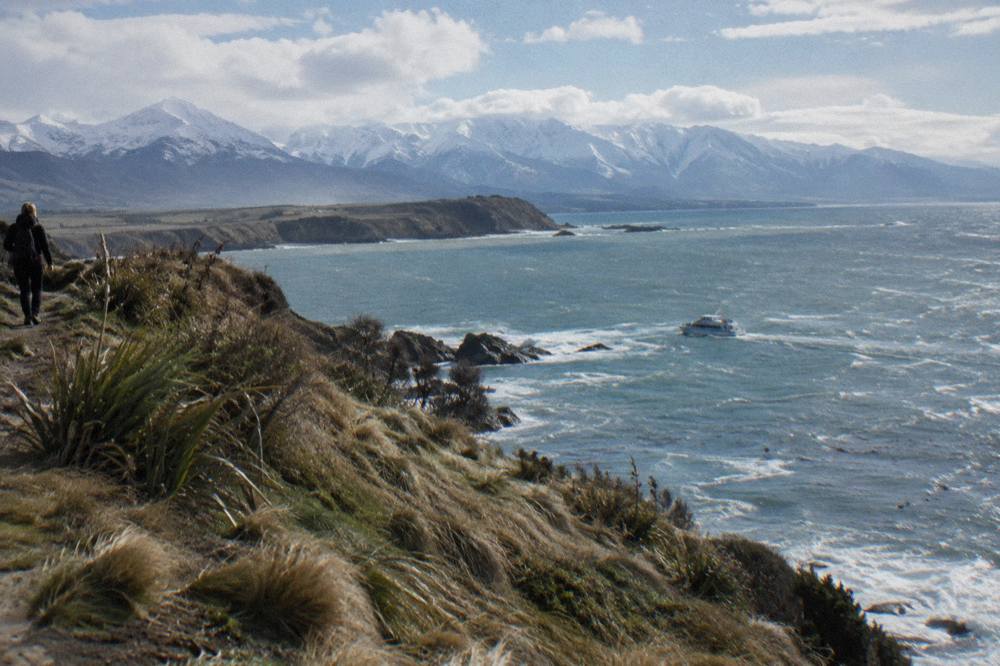
Kaikoura is one of the few places on earth where whale watching runs all year round, and the reason is a single species: the sperm whale. A deep underwater canyon, the Kaikoura Canyon, sits just off the coastline and holds enough squid and fish to keep resident sperm whales feeding within a short boat ride of shore in every season. The operator describes the town as 2.5 hours' drive from Christchurch, close enough that a day trip is realistic on a tight itinerary.
The question that actually decides your dates is not "will I see a whale", it is "which whale". Sperm whales are the anchor, but the migratory species, humpbacks, southern right whales, blue and fin whales, orcas and pilot whales, each turn up in particular months. This guide lays out the calendar month by month, then matches it to the practical side: departure times, prices, refunds and which day tour from Christchurch fits each season.
What Is The Best Time To Go Whale Watching In Kaikoura?
The honest answer is that every month works for sperm whales, because they are resident, so the best time depends on which species you want and how you handle weather. Orcas are reported most often from November to March, migrating humpbacks pass through outside summer, and winter brings the calmest-booking period with discounts the operator has advertised at up to 50 percent off between June and September.
That framing matters because travellers often over-plan around seasons that barely exist here. Whale Watch Kaikoura runs trips year-round from its base on the Esplanade, with departures at times such as 7:45 am, 10:30 am and 1:15 pm, plus an extra 4 pm sailing between November and March when daylight and demand both stretch. The whole experience runs 3 hours 15 minutes door to door, a little over 2 hours of it on the water, with check-in 30 minutes before departure.
Weather, not whale absence, is the real variable. Sea conditions off Kaikoura change fast, and trips are sometimes cancelled for safety rather than for lack of animals. Travellers ask about this constantly on Reddit, in threads about weather cancellations, and the standard advice that comes back is to build a buffer day into the itinerary and rebook rather than gamble on a single morning. The operator's own policy supports that approach: changes are free, an 80 percent refund applies if no whale is sighted, and cancellations inside 48 hours of check-in are not refunded. The full detail on all of this sits in how often Kaikoura whale watch tours get cancelled.
A practical note for anyone prone to queasiness: the same swells that cancel trips also cause seasickness, and winter is not automatically calmer or rougher than summer, it simply varies trip to trip. The preparation advice in will you get seasick on a Kaikoura whale watching boat covers medication timing and where to sit on the vessel.
What Whales Can You See In Kaikoura?
The resident sperm whale is the guaranteed headline species in the sense that it feeds off Kaikoura all year. Beyond it, the operator lists seasonal humpback whales, pilot whales, blue whales, southern right whales and fin whales as visitors, orcas as most frequent from November to March, and dusky dolphins and New Zealand fur seals as everyday companions on most trips.
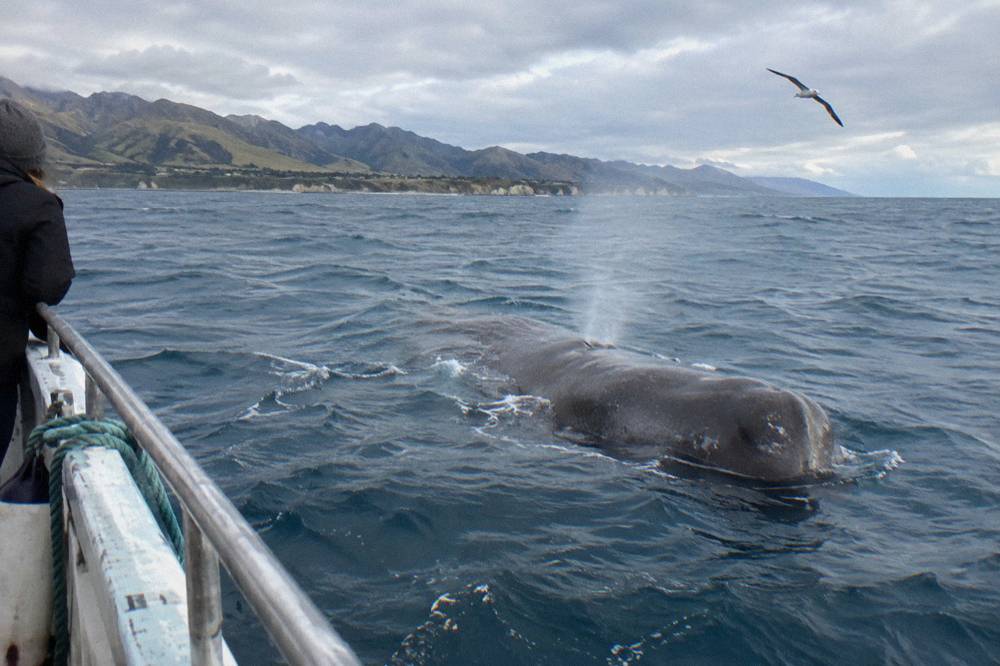
The sperm whale is what makes the Kaikoura model work. These are the largest of the toothed whales, they dive for squid in the canyon system close to shore, and between dives they rest at the surface for several minutes, which gives every boat a chance to hold position and watch. No operator can promise a sighting on any given day, and nothing on this page should be read that way, but the operator states a success rate over 90 percent and backs it with an 80 percent refund when a trip ends without a whale.
The migratory species are the bonus draws, and their timing is loose rather than scheduled. Humpbacks travelling between Antarctic feeding grounds and tropical breeding grounds pass New Zealand waters broadly outside the summer months. Blue and fin whales appear rarely, usually reported by the operator as exceptional sightings rather than a season you can book around. Orcas, which are actually large dolphins, are the ones with the clearest pattern: the operator's own FAQ flags November to March as when they are most often seen, typically hunting the dusky dolphins and fur seals that live along this coast.
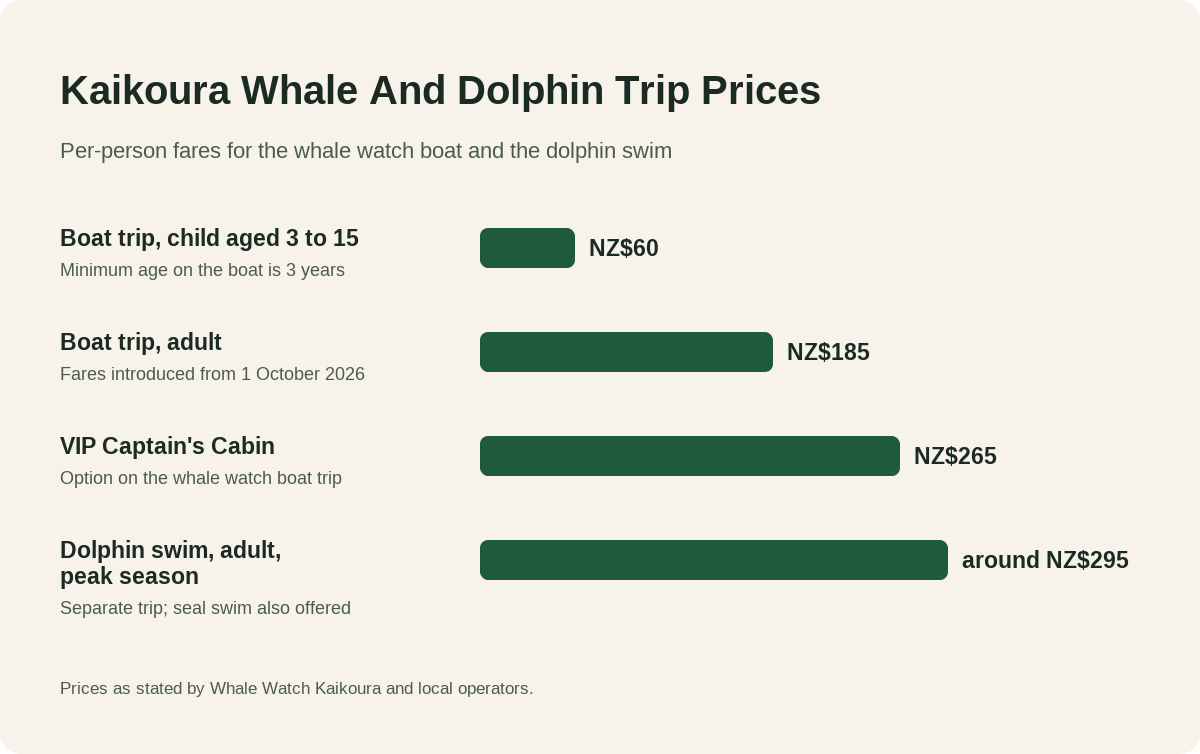
Dusky dolphins deserve their own line in the plan. They are present year-round in large groups, and spring, roughly September to November, is when local operators report a rest period in the dolphins' activity as the breeding season winds down, though they remain in the area. Swimmers who want to get in the water with them can book a separate dolphin swim, with adult peak-season prices around NZ$295, or a seal swim, which Seal Swim Kaikoura lists at NZ$159 to NZ$179 per adult.
| Species | When it is seen | How reliable | Source |
|---|---|---|---|
| Sperm whale | Every month, resident | Operator states success over 90% | Whale Watch Kaikoura FAQ |
| Orca | Most often November to March | Occasional, not schedulable | Whale Watch Kaikoura FAQ |
| Humpback whale | Seasonal, mainly outside summer | Occasional | Whale Watch Kaikoura FAQ |
| Southern right whale | Seasonal, uncommon | Rare | Whale Watch Kaikoura FAQ |
| Pilot whale | Seasonal | Occasional | Whale Watch Kaikoura FAQ |
| Blue and fin whale | Seasonal, rare | Exceptional sightings | Whale Watch Kaikoura FAQ |
| Dusky dolphin | Year-round, spring rest period | Common on most trips | Local operators |
When Do You See Sperm Whales In Kaikoura?
You can see sperm whales in Kaikoura in any month of the year, including mid-winter, because this population does not migrate. Individual animals rotate through the feeding grounds, diving and resting on a cycle of roughly an hour or more, and the boat crews track them with hydrophones that pick up their click vocalisations between dives.
That resident behaviour is the whole reason Kaikoura can sell whale watching as a year-round product while other New Zealand locations cannot. The canyon's food supply holds the animals in place, and the operator's spotting system, listening rather than looking, means a diving whale is not a lost whale. On a typical trip the boat runs to where the hydrophones indicate an animal, waits out the dive, and is usually on the spot when the whale surfaces to breathe and recover.
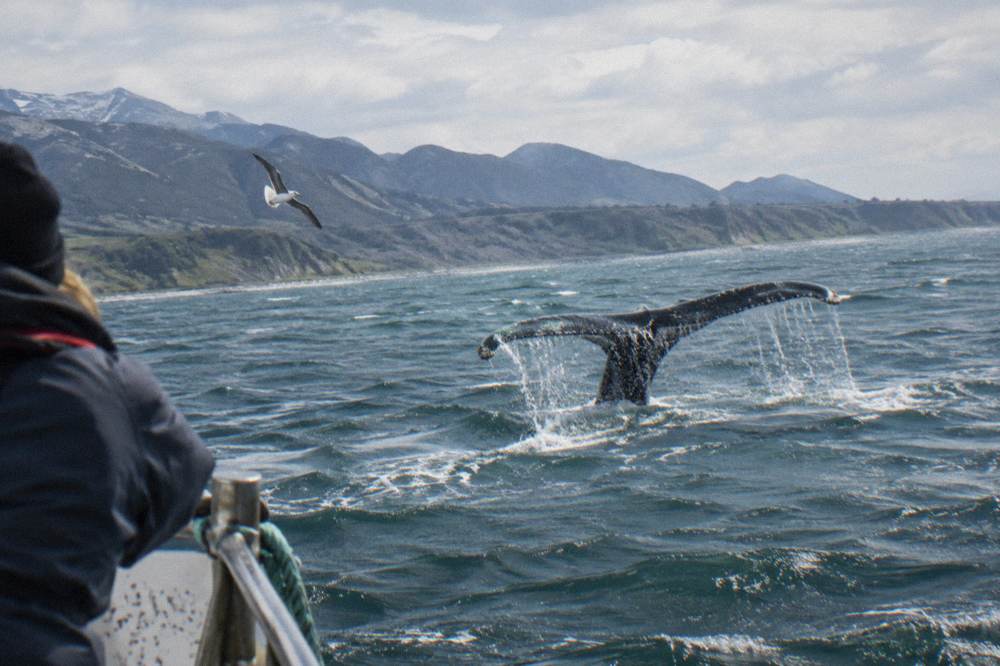
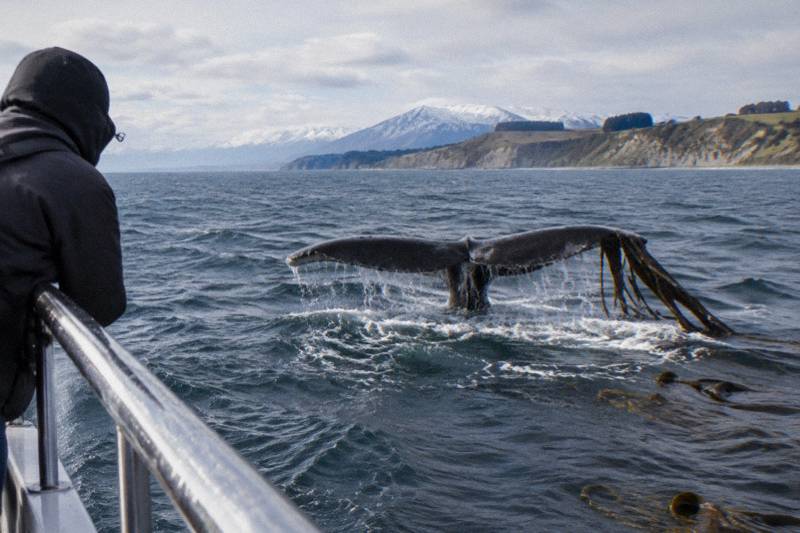
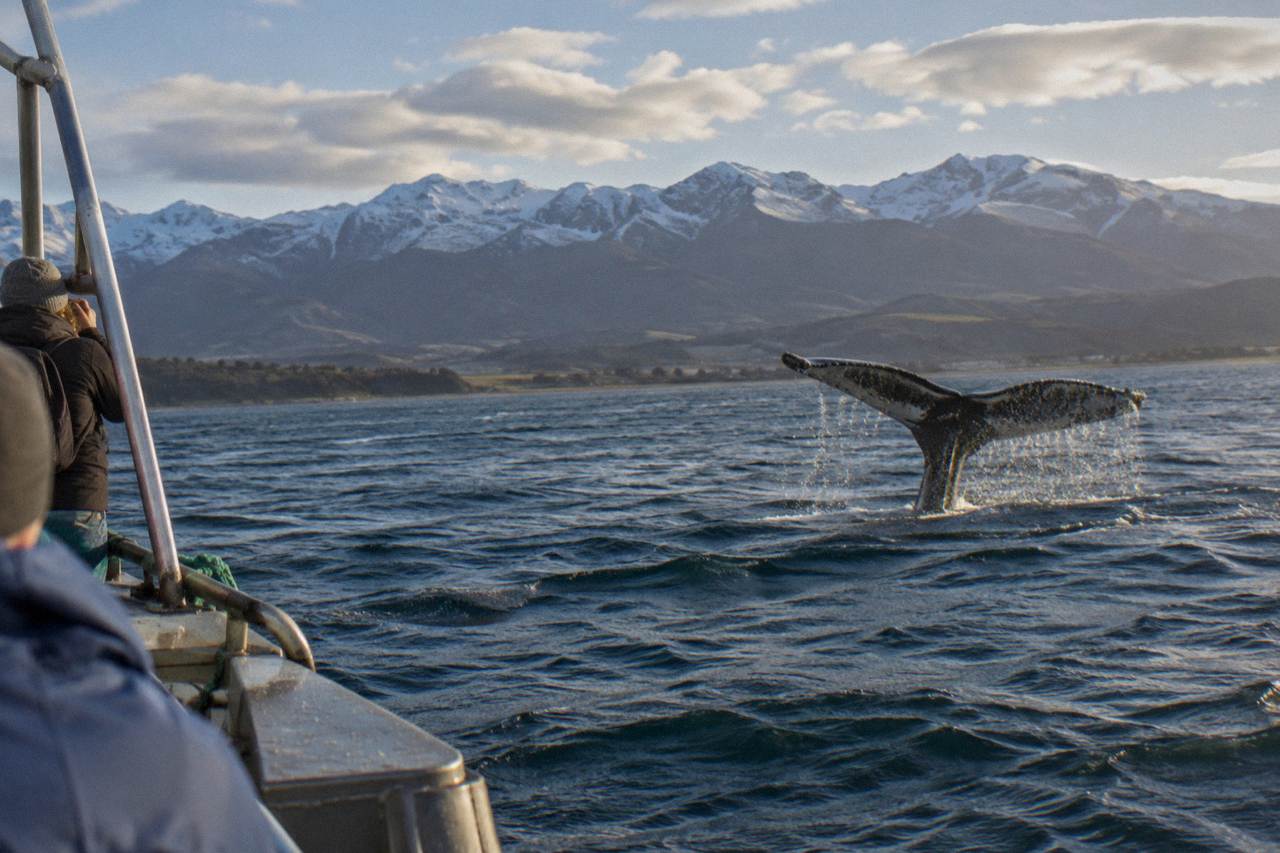
The showpiece moment is the fluke-up dive, when the whale lifts its tail clear of the water as it slides into a deep feeding dive. Photographers who want that shot should note the surface interval is the better window: the whale lies relatively still while re-oxygenating, then gives several seconds of warning before arching into the dive. Minimum age on the boat is 3 years, which makes the trip viable for families with young children that many wildlife tours exclude.
Pricing for the boat trip itself is NZ$185 per adult and NZ$60 per child aged 3 to 15, fares the operator introduced from 1 October 2026, with a VIP Captain's Cabin option at NZ$265. Those figures are for the Kaikoura experience alone; most visitors from Christchurch bundle it into a day tour, which adds coach transport and usually lunch, and the comparison below covers what those bundles cost.
Kaikoura Whales By Month: The Calendar
Each month in Kaikoura delivers sperm whales and dusky dolphins, with the variation coming from migrants and orcas: orca reports peak November to March, humpback and other migrating whales pass through mainly outside the summer peak, and winter brings lower demand and operator discounts of up to 50 percent on the boat fare.
The table below folds the operator's species notes into a planning calendar. Read the "also seen" column as possibility, not promise: nothing except the sperm whale is predictable enough to build a non-refundable trip around, and even the resident whales depend on sea state on the day.
| Month | Headline species | Also possible | Notes for planners |
|---|---|---|---|
| January | Sperm whale | Orca, dusky dolphins | Peak season, extra 4 pm departure runs |
| February | Sperm whale | Orca, dusky dolphins | Peak demand, book well ahead |
| March | Sperm whale | Orca, late-season migrants | Last month of the extra afternoon sailing |
| April | Sperm whale | Humpback passing | Shoulder season, thinner crowds |
| May | Sperm whale | Humpback, pilot whales | Quieter on the water and in town |
| June | Sperm whale | Humpback, southern right possible | Winter fares discounted, colder at sea |
| July | Sperm whale | Migrating whales | Deepest off-season discounts |
| August | Sperm whale | Migrating whales | Cold but cheap; pack warm layers |
| September | Sperm whale | Early migrants return | Winter sale runs to end of September |
| October | Sperm whale | Increasing dolphin activity | New fare year begins 1 October |
| November | Sperm whale | Orca season begins | Orca reports start climbing |
| December | Sperm whale | Orca, summer dolphins | Peak season restarts, summer timetable back |
Two patterns in that calendar are worth acting on. First, the November to March orca window overlaps exactly with the busiest visitor season, so travellers whose hearts are set on orcas are also competing with the largest crowds for boat seats, and should book the date-flexible way. Second, the June to September discount window is the cheapest time to see the exact same resident sperm whales, and the money saved on the fare, up to half price at the deepest discount, funds a warmer jacket several times over.
Winter does come with a trade-off outside the fare. Daylight is shorter, sea conditions are no more predictable than in summer, and if a morning sailing cancels, the rebooking options later in the day are fewer. Anyone travelling in winter on a tight schedule should keep a spare half-day in Kaikoura or, better, an overnight, an option weighed in detail in the complete guide to Kaikoura whale watching from Christchurch.
Booking A Day Tour That Matches Your Month
A whale day tour from Christchurch costs from NZ$372 to NZ$390 per person including the boat trip, coach transport and, on most tour schedules, lunch, against the NZ$185 boat fare alone plus a 2.5 hour drive each way and parking. The right choice depends on group size and how much of the coast you want explained, not on the calendar, since all of them run to the same year-round whales.
The transport math is what pushes most visitors toward a tour. The drive from Christchurch is about 180 to 185 km on State Highway 1, typically 2 to 2.5 hours each way, and the boats want check-in 30 minutes before a departure that can be as early as 7:45 am, which means leaving the city around 5 am in a rental car. A coach tour absorbs that, and the drivers time the coastal stops, often including a fur seal colony viewpoint, into the journey.
Three listings cover most of the market. The 11-hour whale watch day trip runs from NZ$390 per person and is rated 4.4 across 193 reviews, with hotel pickup and lunch included. The 10-hour day tour runs from NZ$372 per person, rated 4.6 across 311 reviews, also with pickup and lunch. And the small-group Kaikoura whale day trip runs from NZ$380 per person with pickup and a meal, aimed at travellers who prefer fewer fellow passengers; it is a newer listing without an established review pool, which is worth knowing rather than a reason to avoid it.
| Day tour from Christchurch | Duration | From (per person) | Rating | Pickup | Meal |
|---|---|---|---|---|---|
| 11-hour whale watch day trip | 11 hours | NZ$390 | 4.4 across 193 reviews | Yes | Yes |
| 10-hour Kaikoura day tour | 10 hours | NZ$372 | 4.6 across 311 reviews | Yes | Yes |
| Small-group Kaikoura whale day trip | 8 to 10 hours | NZ$380 | Too few reviews yet | Yes | Yes |
Whichever you lean toward, the seasonal logic stays the same: book the 11-hour whale watch day trip for maximum time on the coast, or the small-group Kaikoura whale day trip when a quieter coach matters more than an hour of itinerary. In the November to March orca window, reserve early and pick a free-cancellation rate, because the best weather day is not knowable a month out. For a fuller comparison of boat, plane and helicopter options, the boat versus flight versus helicopter guide breaks down what each one costs and what each one shows you.
Whatever the month, the underlying advice from Christchurch Tours is the same: lock in the sperm whales, treat everything else as a bonus, and keep one flexible day in the plan for the sea state. The full current schedule, fare detail and cancellation policy are published on the Whale Watch Kaikoura FAQ page, and the operator's main site carries live availability for every departure.
Common Questions About Kaikoura Whales By Month
What is the best time to go whale watching in Kaikoura?
Any month works for sperm whales, which are resident year-round. November to March adds the strongest orca reports along with the busiest crowds, while June to September brings winter discounts of up to 50 percent off the boat fare with the same resident whales. Pick by species interest and budget, then keep a weather buffer day.
What whales can you see in Kaikoura?
Sperm whales are the resident headline species. Seasonal visitors include humpback whales, pilot whales, blue whales, southern right whales and fin whales, and orcas are reported most often from November to March. Dusky dolphins and New Zealand fur seals appear on most trips.
When do you see sperm whales in Kaikoura?
All year. The resident population feeds in the Kaikoura Canyon off the coast and does not migrate, so the boats operate in every season without a closed period. The operator reports a sighting success rate over 90 percent and refunds 80 percent of the fare if a trip ends with no whale.
Are whale watching trips cancelled often in Kaikoura?
Cancellations happen for sea state rather than missing whales, and travellers on Reddit report them often enough to matter. Free date changes are allowed, and an 80 percent refund applies when no whale is sighted, but cancelling inside 48 hours of check-in forfeits the fare, so build flexibility into your itinerary.
How much does a Kaikoura whale day tour from Christchurch cost?
Booked day tours including transport, the boat trip and lunch start from NZ$372 to NZ$390 per person. The boat fare alone is NZ$185 per adult and NZ$60 per child aged 3 to 15, before counting the 2.5 hour drive each way and early check-in.
What is the minimum age for whale watching in Kaikoura?
The minimum age on the Whale Watch Kaikoura boat is 3 years, with child fares applying from 3 to 15. There is no upper age limit, and the total experience runs 3 hours 15 minutes, of which a little over 2 hours is on the water.