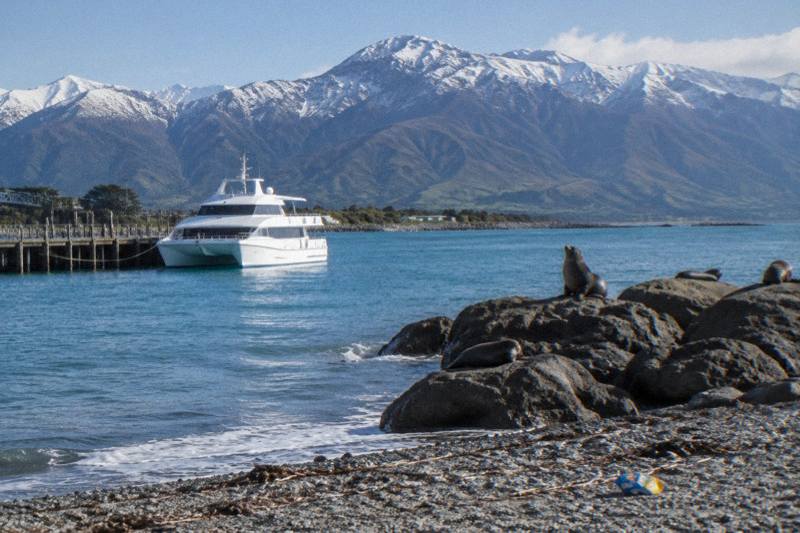
Kaikoura Whale Watching From Christchurch: Complete Guide
Updated November 2, 2026
Kaikoura's resident sperm whales sit about 2.5 hours' drive north of Christchurch, and Whale Watch Kaikoura charges NZ$185 per adult with an 80% refund if no whale is sighted. Here is how the boat trip, the day tours and the logistics all fit together.
Short answer
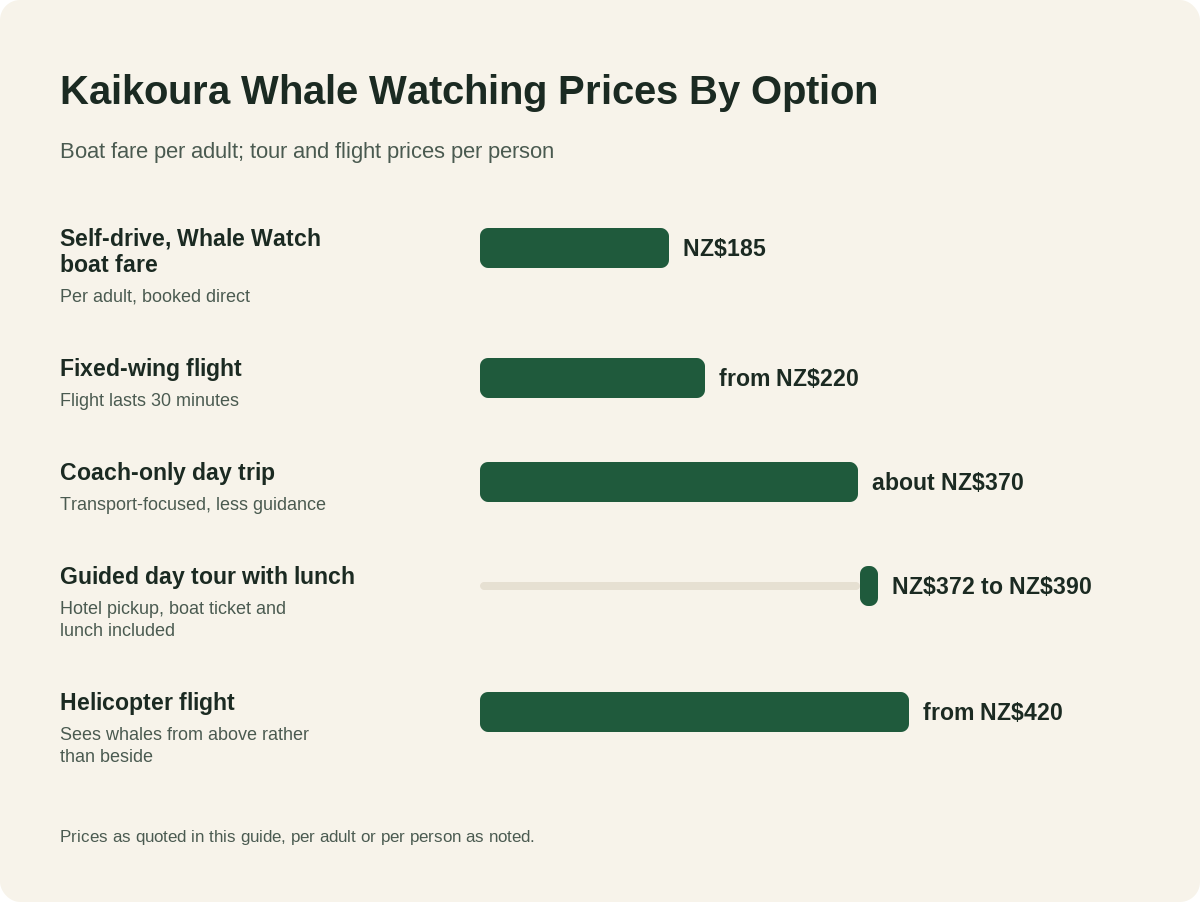
Kaikoura whale watching works as a Christchurch day trip: the drive is 2.5 hours each way, the Whale Watch boat tour costs NZ$185 per adult and NZ$60 per child aged 3 to 15, runs 3 hours 15 minutes in total, and reports sightings on over 90% of trips with an 80% refund when no whale appears. Guided day tours from Christchurch start around NZ$372 per person with lunch included.
Sperm whales feed in the Kaikoura Canyon year-round, a submarine trench that drops to depths of more than a kilometre within sight of the township, and that single piece of geography is what makes Kaikoura one of the workable whale watching destinations you can reach on a day trip from Christchurch. The operator describes the drive from Christchurch as 2.5 hours along State Highway 1, roughly 180 to 185 km each way. The core product, the Whale Watch Kaikoura boat tour, costs NZ$185 per adult and NZ$60 per child aged 3 to 15, with prices published on the operator's own site valid from 1 October 2026 to 30 September 2027.
That is the foundation. This guide prices the boat, explains the refund and cancellation rules, compares the three bookable day tours from Christchurch, and answers the timing questions travellers keep asking, including several that recur on Reddit threads in r/newzealand_travel. For a wider view of what this site covers in the region, Christchurch Tours also publishes guides on Akaroa dolphins, the TranzAlpine and Mount Cook day trips.
How Do You See Kaikoura Whales From Christchurch?
You have two practical options: drive yourself the 2.5 hours each way to Kaikoura and book the Whale Watch boat directly at NZ$185 per adult, or take a guided day tour from Christchurch at NZ$372 to NZ$390 per person, which bundles transport, the boat trip and lunch. Either way, plan on an early start around 7:30 am and a return to Christchurch near 5:45 pm, and both routes put you on the same waters.
The do-it-yourself version gives you control of the clock. You leave Christchurch early, arrive in Kaikoura with time for a morning or midday boat departure, and can stop at seal colonies and roadside lookouts on the coast road south of town. The trade is that you absorb the driving: about 5 hours behind the wheel across the day, more if the SH1 coastal stretch has delays, and you are the one managing the 30-minute check-in window the operator requires before each departure.
The guided version moves the logistics to someone else. Day tours collect you from central Christchurch hotels, drive the corridor while you sleep or watch the scenery, book you onto a whale watch departure, feed you lunch, and return you by early evening. Reddit threads in r/newzealand_travel, including one on car versus bus transport to Kaikoura, keep landing on the same split: travellers who want flexibility drive, and travellers who would rather not face a 6 am alarm after a long flight book the tour. Another recurring thread asks whether Kaikoura works as a day trip at all, and the consensus there is that 2.5 hours each way is doable but an overnight stay is the more relaxed pace, a question examined in detail in Kaikoura As A Day Trip Or Overnight.
A third decision, independent of transport, is how you actually watch the whales. The boat is the classic and cheapest option, but fixed-wing flights from NZ$220 for 30 minutes and helicopter flights from NZ$420 put you above the animals instead of beside them. The boat versus flight versus helicopter comparison works through that choice with full pricing. Flight and helicopter products also sidestep the sea state question entirely, since aircraft fly in conditions that ground the boat, though they carry their own cloud-cover limitations.
There is a fourth, hybrid pattern worth naming: drive north the evening before, overnight in Kaikoura, and take an early sailing the next morning with the whole day left for the coast. It costs a night's accommodation but removes the hardest part of the day trip, the pre-dawn departure, and it builds in a natural rebooking window if the sea cancels your first choice of sailing. Travellers on a two-week South Island itinerary often find this fits better than a same-day dash.
If you would rather someone else handle the drive-boat-lunch chain, these are the three Christchurch day tours built around the Whale Watch boat:
What Are The Odds Of Seeing A Whale On A Whale Watching Tour?
Whale Watch Kaikoura states a success rate of over 90% across its trips, and if no whale is sighted the operator refunds 80% of the fare. The resident sperm whales are present all year, which is why the odds stay high in every season, while migratory species like humpback, pilot and blue whales add variety in particular months rather than being the main draw.
The over-90% figure is the operator's own, published in its frequently asked questions, and it deserves its plain reading: roughly one trip in ten sees no whale at all, and those passengers get 80% of their money back rather than a free rebooking. The resident population is the reason the number holds. Sperm whales hunt in the Kaikoura Canyon through every month, so the boat is not chasing a migration window the way many whale watching ports are.
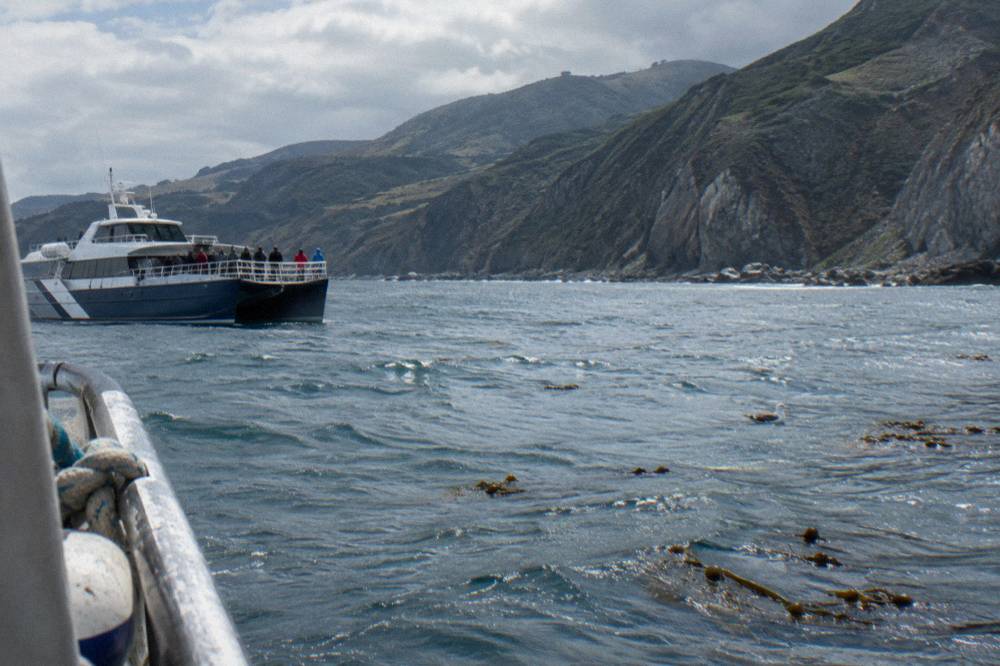
What you might see, and when, varies more than whether you will see something. The operator lists sperm whales as resident, dusky dolphins as a regular companion sighting, orca as most likely between November and March, and humpback, pilot, blue, southern right and fin whales as seasonal visitors. The month-by-month picture, including when each migratory species passes through, is set out in Kaikoura Whales By Month.
| Species | Presence off Kaikoura | Typical viewing |
|---|---|---|
| Sperm whale | Resident, all year | Surface intervals between deep dives |
| Orca | Seasonal, especially Nov to Mar | Pods passing through |
| Humpback whale | Migratory season | Passing animals, less predictable |
| Pilot whale | Seasonal | Pods offshore |
| Blue, fin, southern right whale | Occasional seasonal visitors | Rare sightings |
| Dusky dolphin | Year-round, large groups | Often alongside the boat |
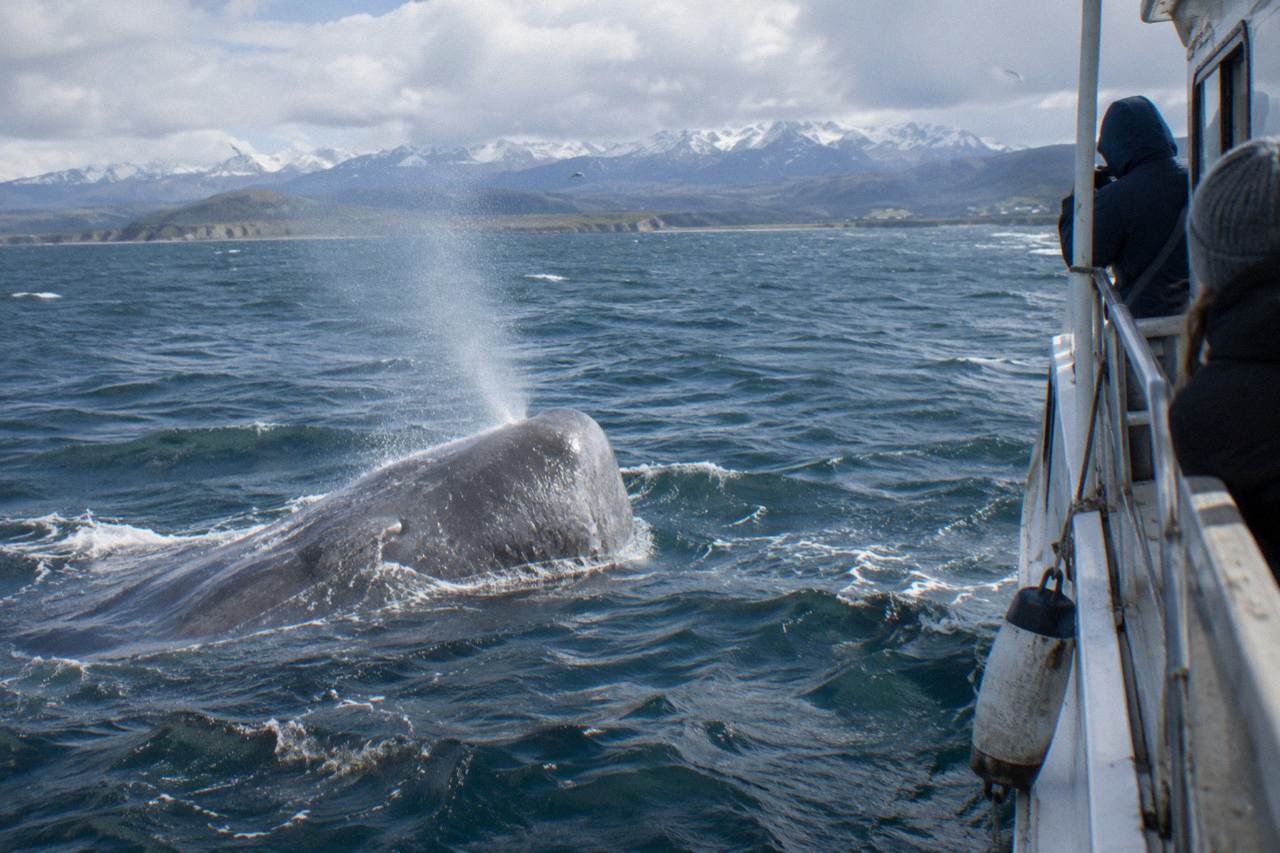
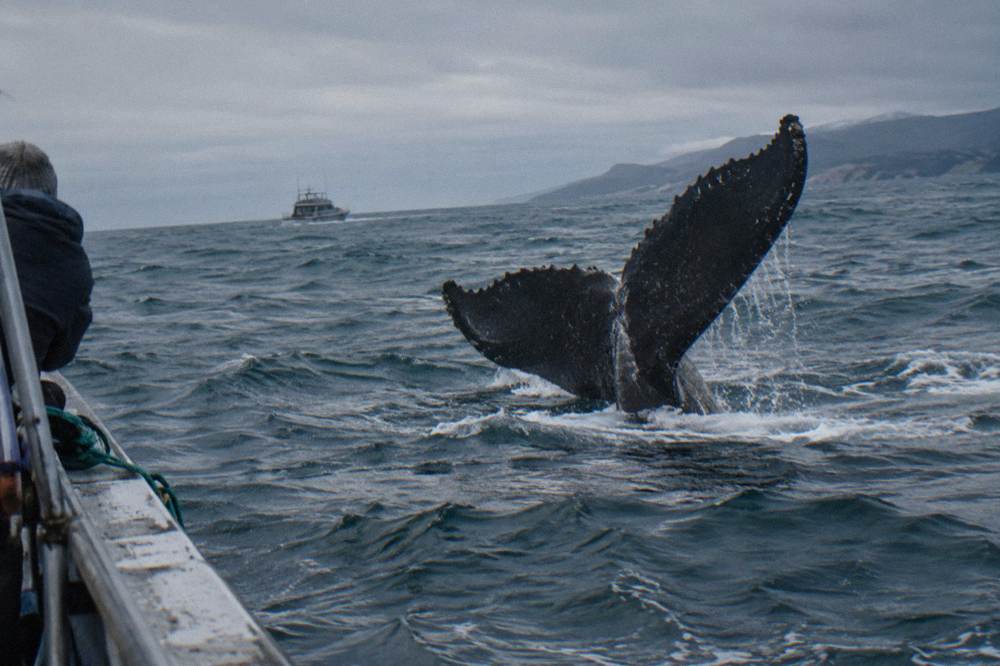
A note on how a sperm whale encounter actually unfolds, since it shapes expectations. The boat travels to where sonar or recent sightings place the animals, then waits through the whale's surface interval, often ten minutes or more of logging, blowing and resting, before the fluke lifts and the dive begins. Photographers get a predictable rhythm rather than a chase, and the crew narrates what the animal is doing. The dive itself, when that tail clears the water, is the image most passengers come home with.
No operator can promise a sighting, and nothing in this guide should be read as one. Weather cancellations are a separate matter from missed sightings: the sea state decides whether the boat sails at all, and a Reddit thread specifically about cancelled whale watch tours records travellers being rebooked, refunded or switched to a flight. The pattern and the rebooking options are covered in How Often Kaikoura Whale Watch Tours Are Cancelled.
Planning around the one-in-ten figure is worth a little thought. If your stay allows, book the tour for your first full day rather than your last: the 80% refund is money back, not a guaranteed second attempt, and a missed sighting on a final day leaves no room to try again. The same buffer also covers weather, since the sea state can scrub a departure entirely.
Set expectations by species as much as by odds. The over-90% rate rests on the resident sperm whales, so a sighting most often means that species, with dusky dolphins alongside as a frequent bonus. Orca, humpback and pilot whales are what make particular months interesting rather than the baseline, and occasional visitors such as blue, fin and southern right whales are best treated as a lucky extra rather than a plan.
How Long Does It Take To Drive From Christchurch To Kaikoura?
The drive from Christchurch to Kaikoura is about 180 to 185 km via State Highway 1 and takes around 2 to 2.5 hours without stops, with the operator's own guidance putting it at 2.5 hours. Most day-trippers leave Christchurch around 7:30 am to reach a late-morning boat departure, check in 30 minutes before sailing, and are back in Christchurch by about 5:45 pm.
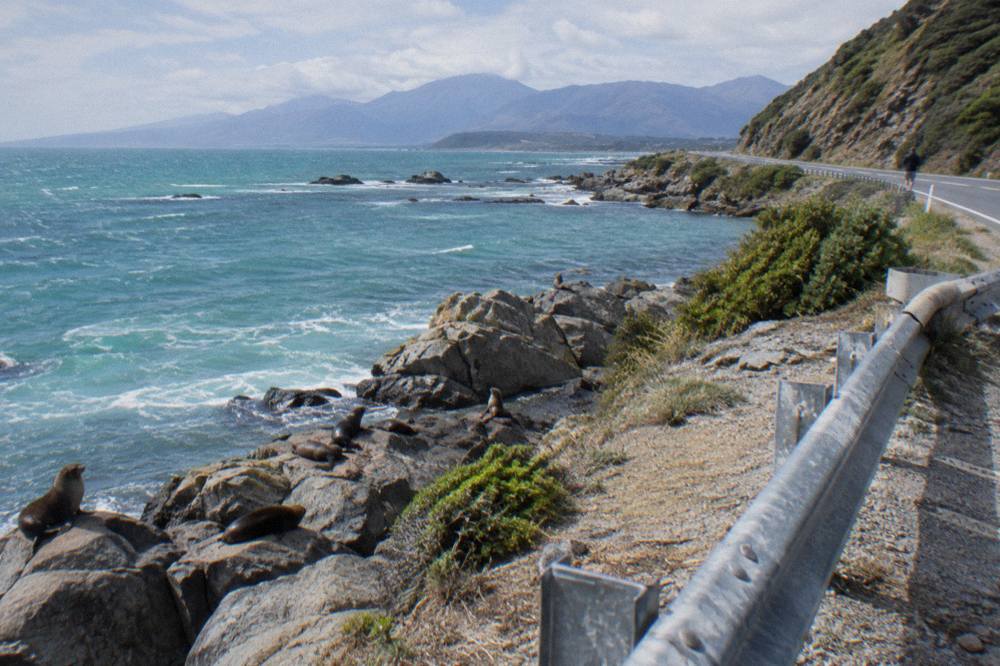
The road runs north through the Waipara wine country, climbs over the Hundalee Hills, then meets the coast for the final approach into Kaikoura. That coastal stretch is the scenic part, with the Seaward Kaikoura Range dropping straight into the sea and a resident fur seal colony at Point Kean just minutes from the township. Building in one stop each way is realistic; building in three turns the drive into the day's main activity.
Fuel planning is straightforward. A return trip of 360 to 370 km in a typical rental works out to a modest fuel bill for the day, well under the NZ$18 per person gap between the cheapest tour and the raw boat fare, which is why the self-drive arithmetic usually favours solo travellers and pairs travelling together. For three or more people the tour premium per head starts to look thinner once parking, timing stress and the driver missing the coastal views are priced in.
| Option | Time each way | Cost | Notes |
|---|---|---|---|
| Self-drive via SH1 | 2 to 2.5 h | Fuel plus NZ$185 adult boat fare | Full flexibility, driver cannot watch the coast |
| Guided day tour | About 10 to 11 h total day | From NZ$372 per person | Hotel pickup, boat ticket and lunch included |
| Coach-only day trip | Similar day length | From about NZ$370 per person | Transport-focused, less guidance |
For travellers without a car, the guided tour is the simplest answer, and the seal swim operators and other Kaikoura activities cluster within a short walk or drive of the whale watch check-in at the railway station precinct, so a tour day can sometimes add a second activity if the schedule allows.
The 11-hour Kaikoura whale watch day trip with lunch is the established large-coach option, rated 4.4 across 193 reviews on the live listing, from NZ$390 per person.
Worried the drive plus boat sounds like a long day on the water with a rough-seas risk? Sea state on the Kaikoura Canyon can be genuine open ocean, and the honest answer about motion sickness, who needs tablets and what the boat itself offers is in Will I Get Seasick On A Kaikoura Whale Watching Boat?
How Much Does A Kaikoura Whale Watching Trip Really Cost?
The boat fare is NZ$185 per adult, NZ$60 per child aged 3 to 15, and NZ$265 for the VIP Captain's Cabin, valid from 1 October 2026. A guided day tour from Christchurch costs NZ$372 to NZ$390 per person including the boat ticket and lunch, while self-driving adds a modest fuel bill on top of the NZ$185 fare.
The headline numbers hide a few add-ons. The Captain's Cabin upgrades you to the wheelhouse with the crew and limited seats. Children under 3 cannot travel, since the operator sets a minimum age of 3. The fare covers the full 3 hours 15 minutes experience, of which just over 2 hours is on the water.
| Cost item | Adult price | Child price | Source |
|---|---|---|---|
| Whale Watch boat, Ocean Cabin | NZ$185 | NZ$60 (3-15) | Operator site |
| Whale Watch boat, VIP Captain's Cabin | NZ$265 | on the listing | Operator FAQ |
| Guided day tour, large coach, with lunch | from NZ$390 | on the listing | Tour listing |
| Guided day tour, 10-hour, with lunch | from NZ$372 | on the listing | Tour listing |
| Small-group guided day tour | from NZ$380 | on the listing | Tour listing |
| Dolphin Encounter swim, peak season | NZ$295 | on the listing | Operator site |
| Seal Swim Kaikoura | NZ$159 to NZ$179 | on the listing | Operator site |
The full worked budget, including what a self-drive day adds up to against each tour, is broken down line by line in Kaikoura Whale Watching Price And Day Trip Cost. One structural point is worth flagging here: the tour markup over the raw boat fare is paying for about 6 hours of driving, pickup logistics and lunch, so the premium per hour of actual convenience is smaller than the sticker gap suggests. Families should also do the child maths before assuming the tour is dearer, since a child's tour seat, where the listing carries one, can compare reasonably against NZ$60 for the boat plus a share of fuel and lunch.
The small-group version is worth a look if the coach experience appeals less than a van with a guide who can answer questions. The small-group Kaikoura whale day trip runs 8 to 10 hours from NZ$380 per person with lunch included, and the operator has not yet published enough reviews on the live listing to support a rating claim.
What Is The Best Time To Go Whale Watching In Kaikoura?
Sperm whales are resident, so any month can produce a sighting and the over-90% success figure applies year-round. The seasonal differences are in the extras: orca are most likely from November to March, an extra 4 pm departure runs November to March, and the operator has run winter sales of up to 50% off between June and September, making the cold months the cheapest window.
Summer brings the widest species list, the extra afternoon departure and the busiest boats. Winter brings lower fares, when the operator discounts, and the same resident sperm whales, at the cost of colder decks and a higher chance of a weather cancellation. Spring and autumn sit between the two, and April plus October are the months frequent travellers mention for a balance of decent weather and thinner crowds, though that is a preference rather than an operator statement.
For a species-by-species calendar, including when the migratory whales pass through and what the dusky dolphin groups do through the year, see Which Whales Appear In Kaikoura Each Month.
| Period | Sperm whales | Seasonal extras | Price signal |
|---|---|---|---|
| Nov to Mar | Resident | Orca most likely, extra 4 pm departure | Peak demand |
| Apr to May | Resident | Humpback and southern right possible | Shoulder |
| Jun to Sep | Resident | Quietest boats, coldest decks | Operator has run sales up to 50% off |
| Oct | Resident | Spring mix, warming sea | Standard fares from 1 Oct |
The one timing trap worth naming plainly: a tight itinerary with a single free day in Christchurch gives you no rebooking window if the sea cancels your trip. Travellers with two or more possible days, or an overnight in Kaikoura, absorb cancellations far more easily.
Is It Better To Go Whale Watching In The Morning Or In The Afternoon?
The operator runs morning departures around 7:45 am and 10:30 am, an early afternoon trip at 1:15 pm, and an additional 4 pm sailing from November to March. Sighting odds do not differ by departure time in anything the operator publishes, so the practical choice comes down to sea state, often calmer early, and how the departure fits your drive or tour schedule.
Reddit threads on transport to Kaikoura repeatedly recommend the early start for calm seas, and that is traveller advice rather than an operator claim. The physics behind it is real enough: afternoon wind is a known pattern on exposed coasts. What no source supports is a promise that morning equals whales; the sperm whales dive and feed on their own schedule regardless of the clock.
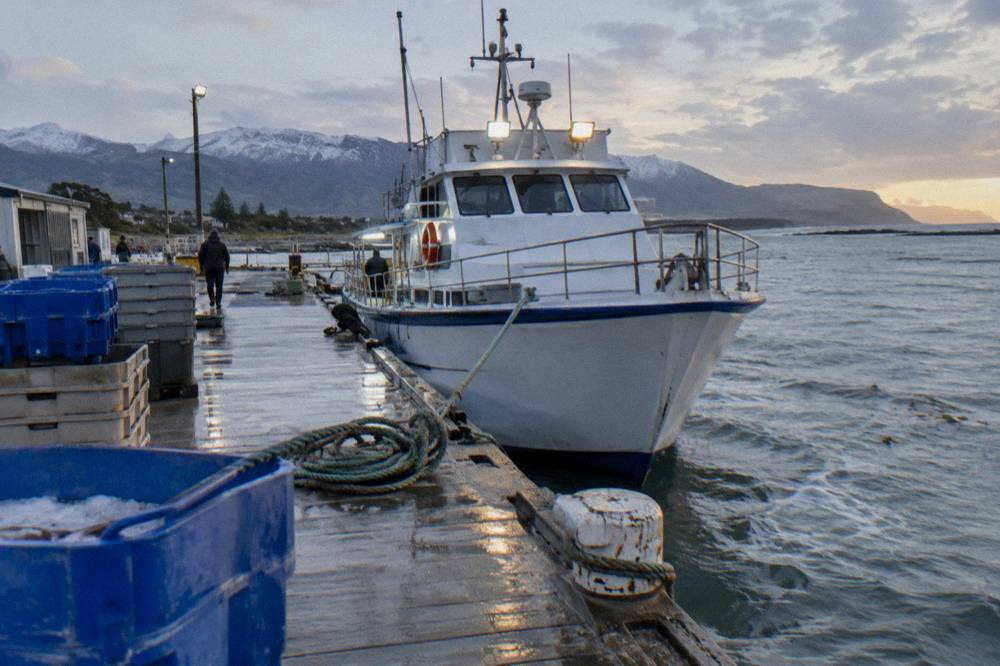
Day tours from Christchurch effectively make this choice for you: the drive time forces a late-morning or early-afternoon sailing. Independent travellers booking the boat directly can pick the 7:45 am departure only if they overnight in Kaikoura first, since a 2.5-hour drive plus 30-minute check-in means leaving Christchurch around 6:45 am at the latest, which is technically possible and rarely enjoyable.
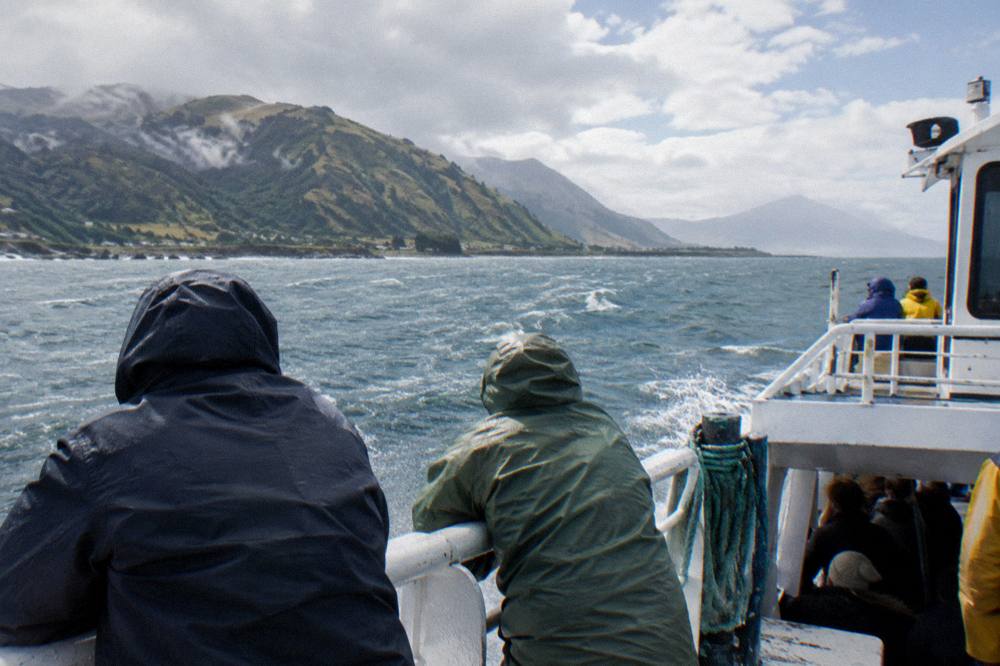
The 10-hour Kaikoura day tour with whale watching from NZ$372 per person, rated 4.6 across 311 reviews on its live listing, is the mid-priced of the three guided options and typically targets a late-morning sailing.
What Happens If The Weather Cancels Or No Whale Appears?
If no whale is sighted, Whale Watch Kaikoura refunds 80% of the fare. If you cancel yourself inside 48 hours of check-in there is no refund, while changes are free outside that window. Weather cancellations by the operator are handled separately, and traveller reports describe rebooking onto later departures, refunds, or switching to a scenic flight.
The 80% rule is the one that surprises people in both directions. Some expect a full refund and get 80%; others expect nothing and get most of their money back. The 48-hour self-cancellation cutoff is the stricter edge: a day tour booked two days out leaves you almost no free-cancellation margin on the boat component, though the tour operators' own cancellation terms, shown on each live listing, are separate and often more generous.
Weather is the bigger schedule risk than whales. When the swell on the canyon is beyond the boat's operating window, the operator cancels and the day tours either rebook passengers onto the next sailing or convert the day into a coastline and seal-colony itinerary, depending on timing. The frequency of these cancellations, and what travellers on a well-known Reddit thread did about them, is covered in how often Kaikoura whale tours get cancelled.
Which Kaikoura Day Tour Should You Book From Christchurch?
The NZ$390 eleven-hour tour suits travellers who want the fullest day and lunch included; the NZ$380 small-group tour trades review history for a van-size group; and the NZ$372 ten-hour tour is the value pick with a 4.6 rating across 311 reviews. All three include hotel pickup and lunch, and all put you on the same whale watch waters.
The differences are real but narrow. Group size, coach comfort and the exact stops on the drive south, a seal colony pause here, a coastline photo stop there, are what separate them, not the whales. If the boat is the whole point, pick on price, pickup convenience and cancellation terms rather than on promises no operator can make about sightings.
| Tour | Length | From (per person) | Rating | Pickup | Lunch |
|---|---|---|---|---|---|
| 11-hour whale watch day trip | 11 h | NZ$390 | 4.4 across 193 reviews | Yes | Yes |
| Small-group Kaikoura day tour | 8 to 10 h | NZ$380 | Too few reviews yet | Yes | Yes |
| 10-hour Kaikoura day tour | 10 h | NZ$372 | 4.6 across 311 reviews | Yes | Yes |
Travellers who enjoy a bigger boat and a quieter pace sometimes extend the Kaikoura idea south instead, pairing a whale day with the Akaroa dolphin cruise options from Christchurch across two days. But if Kaikoura is the single headline trip of a Christchurch stay, the choice above is the whole decision, and the live listings carry the current dates, pickup points and cancellation windows for each one.
Common Questions About Kaikoura Whale Watching
What are the odds of seeing a whale on a whale watching tour?
Whale Watch Kaikoura reports sightings on over 90% of its trips, backed by an 80% refund when no whale is sighted. The resident sperm whale population keeps the odds stable across all seasons.
What is the best time to go whale watching in Kaikoura?
Sperm whales are present year-round. November to March adds orca and an extra 4 pm departure, while the operator has discounted winter fares by up to 50% between June and September.
How long does it take to drive from Christchurch to Kaikoura?
About 2 to 2.5 hours each way, roughly 180 to 185 km via State Highway 1. The whale watch operator's own guidance allows 2.5 hours.
Is it better to go whale watching in the morning or in the afternoon?
The operator publishes no difference in sighting odds by departure time. Travellers often prefer morning trips for calmer seas, but that is reported advice, not an operator guarantee.
What happens if no whale is sighted?
Whale Watch Kaikoura refunds 80% of the fare. Cancelling yourself inside 48 hours of check-in forfeits the fare; changes outside that window are free.
Can children go on the whale watch boat?
Yes, from age 3. Children aged 3 to 15 pay NZ$60, and under-3s cannot travel.