Best Season For Lake Tekapo Lupins And Snow: Month By Month
Updated November 2, 2026
The lupin bloom peaks at Lake Tekapo in early to mid-December, snow and ice can affect the Mount Cook road from May to October, and the Tasman Glacier boat season closes in July and August. Here is how those three calendars overlap, month by month.
Short answer
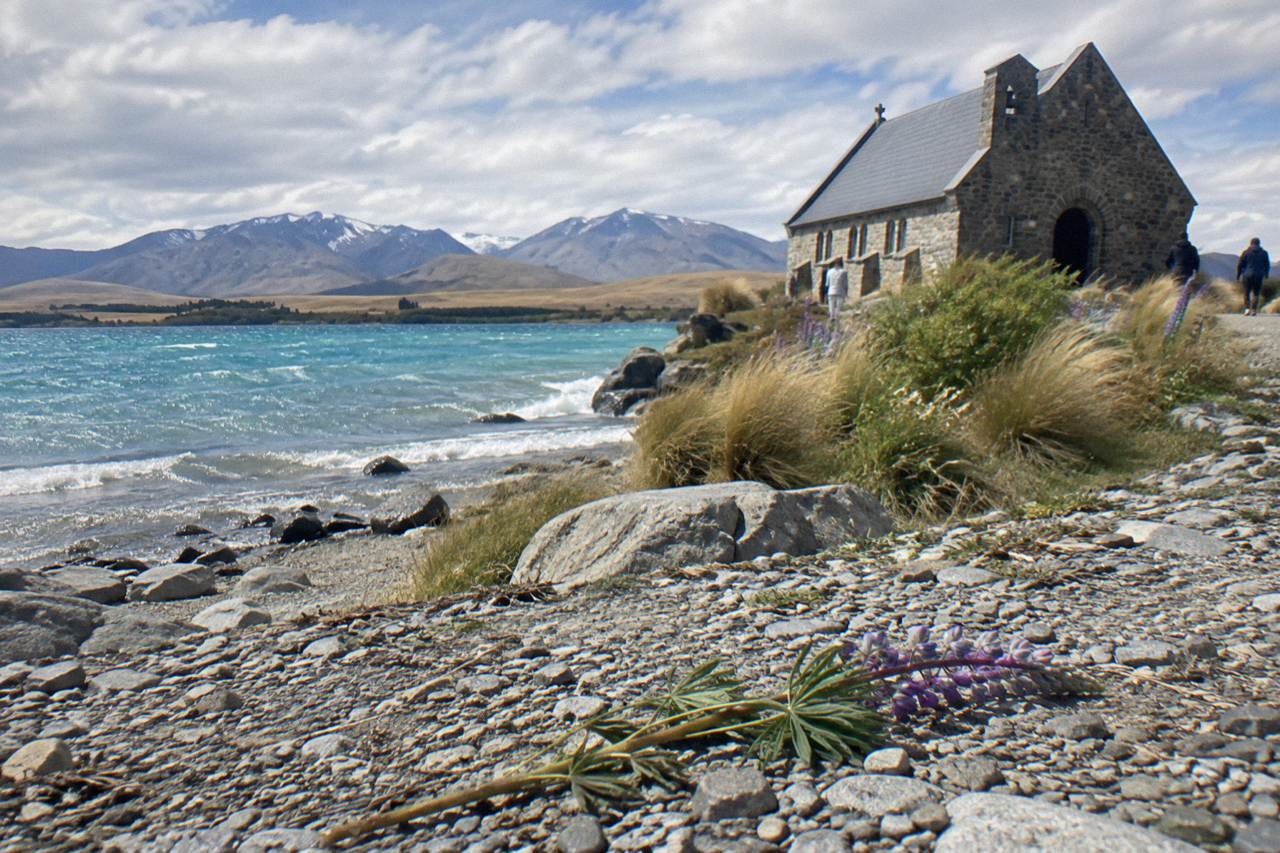
Lupins flower at Lake Tekapo from late November to mid-December, peaking in early to mid-December. Snow and ice are possible from May to October, with June to August the coldest months, and State Highway 80 to Mount Cook can close in winter. Glacier Explorers runs about September to mid-June and closes in July and August.
Lake Tekapo sits about 225 km from Christchurch, roughly a 3 hour drive, and its two headline attractions run on opposite clocks: the lupin bloom that draws photographers in early summer, and the snow season that can close the Mount Cook road in midwinter. Picking a travel month means choosing which of those calendars matters more to you, because the window where both the bloom and every operator are running is narrower than most visitors expect. This planner lines up the bloom dates, the snow risk and the seasonal closures side by side, then maps them onto the day tours that run from Christchurch.
The headline dates are these. Lupins flower from late November to mid-December, with the peak generally early to mid-December. Snow and ice are possible in the Mackenzie from May to October, and the alpine road to Mount Cook Village can close in that period, which the Department of Conservation flags as June to September. The Glacier Explorers boat on the Tasman Glacier lake operates roughly September to mid-June and closes in July and August. Everything else on this page hangs off those three facts.
When Do The Lupins Bloom At Lake Tekapo?
Lupins at Lake Tekapo bloom from late November through mid-December, and the peak colour generally falls in early to mid-December. The display is at its most photographed along the lakefront and the road margins south of the village, and it fades quickly once the flowers set seed in the second half of December. Travellers who arrive in January or February should expect green lake margins, not purple ones.
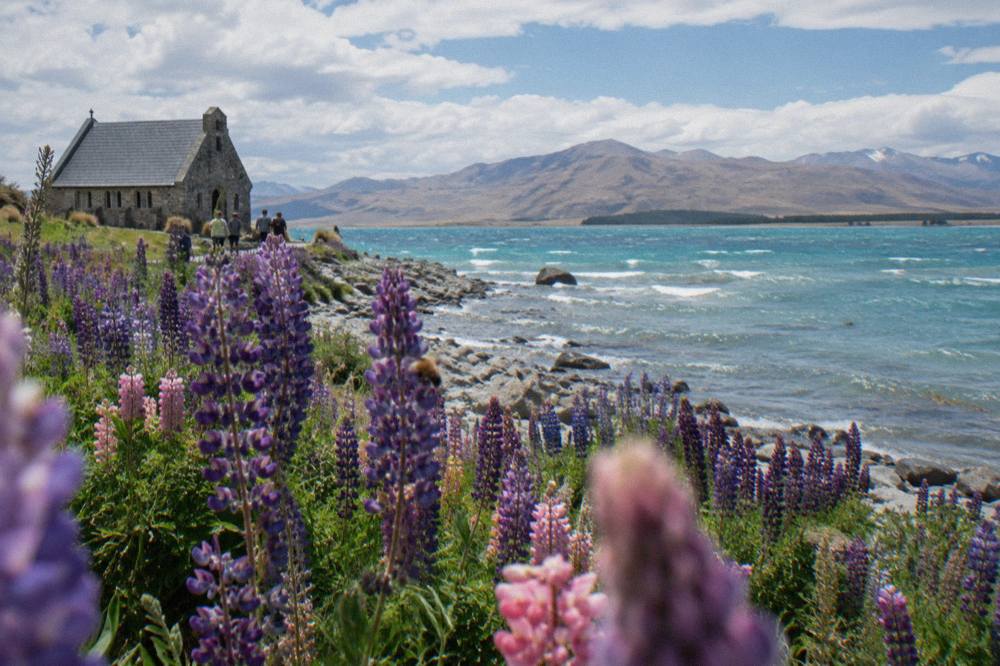
The bloom is a genuine two-to-three-week event rather than a season. Russell lupins are an introduced garden escapee, and in the Mackenzie Basin they flower on the calendar above, which tourism reporting for the region puts at late November to mid-December with the peak in the first half of December. What that means in practice: a day tour on 10 December has a strong chance of driving past full colour on the Tekapo lakefront, while the same tour on 5 January has almost none. Mid-summer visitors still get the turquoise lake, the Church of the Good Shepherd and Mount Cook itself, but the lupin meadows are finished.
A second, quieter point is worth knowing before you book. The bloom overlaps with the start of peak domestic travel, and the lakefront car parks and the church viewpoint get busy in the middle of the day. Most day tours from Christchurch time their Tekapo stop for mid-morning or late afternoon on the drive out or back, which spreads the crowd a little. The full picture of what those tours include, from lunch stops to how long you get at each location, is in the Mount Cook and Tekapo day tours guide, which compares the main operators running the route.
If you are targeting the bloom specifically, treat the first two weeks of December as the aim point and accept that weather can shift flowering by several days in either direction. A tour with free cancellation is useful here: book the date, watch the bloom reports, and shift if the flowers are running late.
Does It Snow At Lake Tekapo?
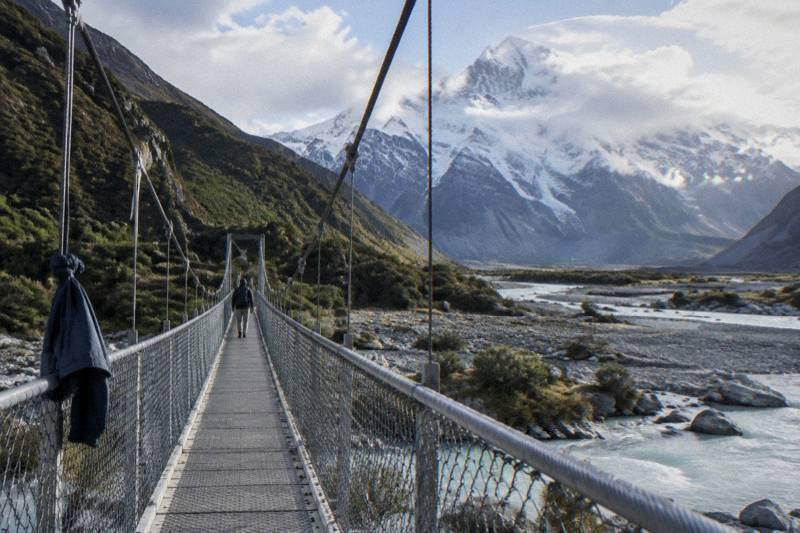
Yes. Snow and ice are possible in the Tekapo and Mount Cook area from May to October, with June to August the core of the snow season, and State Highway 80 between Tekapo and Mount Cook Village can close temporarily in winter. The Department of Conservation states that winter access to Aoraki Mount Cook may be limited from June to September. Snow on the peaks around the lake is common well outside those months too.
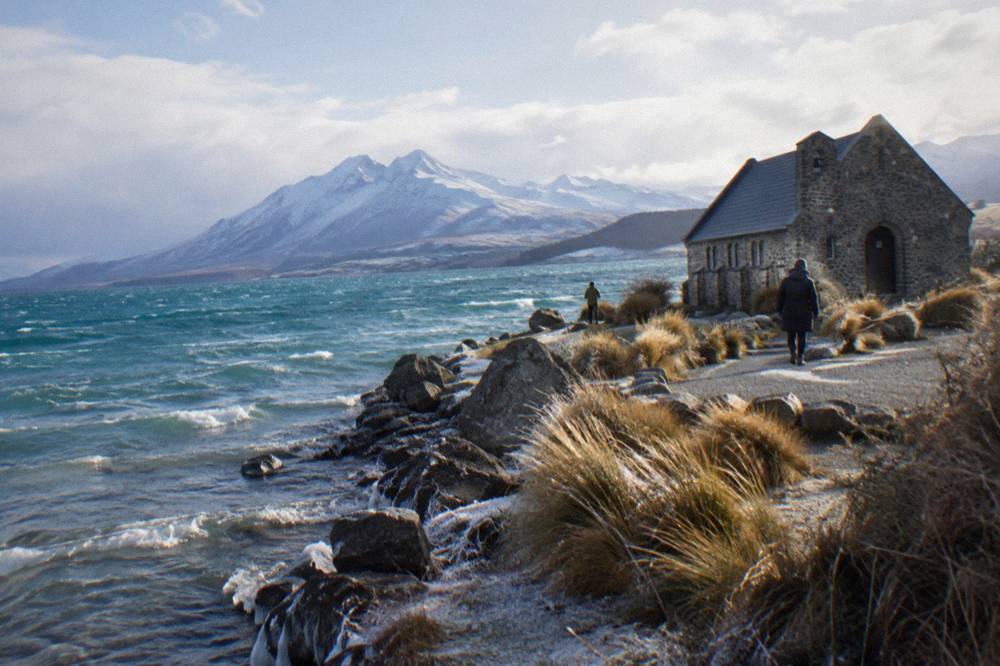
The distinction that matters for planning is between snow on the mountains, which you will see most of the year, and snow on the roads. The peaks around Tekapo and Mount Cook hold snow well into spring, and a fresh fall can dust the ranges in any month. Road closures are a winter phenomenon: DOC's Aoraki Mount Cook National Park page advises that access in winter, June to September, may be limited, and regional tourism guidance notes that SH80 can close during snow and ice events, with the risk running from May to October. Closures are usually hours to a day rather than days on end, but on a 13 hour day tour a closure means the itinerary changes, not that you get a second try.
One operator season is hard-wired to that winter window. Glacier Explorers, the boat trip on the Tasman Glacier lake, operates from about September to mid-June and is closed in July and August, when lake ice and avalanche risk end the season. Adult tickets are NZ$219 and children 4 to 14 are NZ$99, with a family option from NZ$549, and the trip takes about 2 hours 45 minutes including a 1.5 km walk each way to the lake. If the glacier boat is on your list, July and August are already off the table, snow or no snow. The trade-offs between that boat and the free shoreline walks are laid out in the Tasman glacier boat versus viewpoint hike comparison, including the winter alternative.
For walkers, winter changes the free options rather than removing them. The Hooker Valley Track, 10 km return and 3 to 4 hours per DOC, stays open year-round, but in the snow months it requires alpine gear and experience, and most day-trippers should treat it as a three-season walk. The much-repeated question of whether such a long day is worth it at all, with roughly 8 hours of driving inside a 13 hour itinerary, is tackled honestly in is a 13-hour Mount Cook day trip worth it, and the answer changes with the season.
What Is The Best Month To Visit Mount Cook?
There is no single best month, there are three good ones for different reasons. Early December pairs peak lupins with long daylight and every operator running. February and March give the most settled weather and full access with no closures. September to November works for snow scenery on the peaks, fewer crowds and the reopening of the glacier boat, though spring weather is changeable.
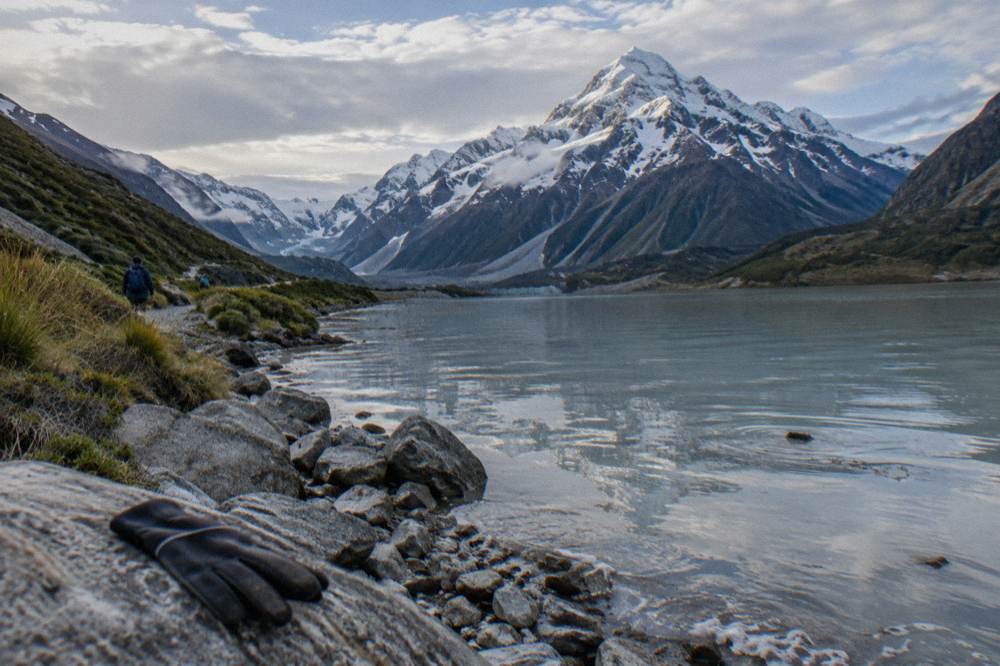
Here is the month-by-month table that the rest of this section explains.
| Month | Lupins | Snow and road risk | Key seasonal notes |
|---|---|---|---|
| January | Finished | Low | Warmest stretch, busiest lakefront, all operators running |
| February | None | Low | Often settled weather, full access, good hiking conditions |
| March | None | Low to moderate | Late-summer walks, first autumn colour late in the month |
| April | None | Moderate | Autumn colour, Glacier Explorers still running to mid-June |
| May | None | Moderate, snow possible | Quieter roads, cold mornings, ice possible on SH80 |
| June | None | High, peak snow begins | DOC winter access caution starts, glacier boat near season end |
| July | None | Highest | Glacier Explorers closed, alpine gear needed for any walk |
| August | None | Highest | Glacier Explorers closed, SH80 closure risk at its peak |
| September | None | High, easing | Glacier Explorers season restarts, snow still on the ranges |
| October | First plants | Moderate | Spring growth, whale and bird activity picking up regionally |
| November | Late-month bloom starts | Low to moderate | First lupins appear late in the month, glacier boat running |
| December | Peak bloom to mid-month | Low | Early to mid-December peak colour, busiest photo spots |
The December case is the strongest if the lupins are the reason for the trip, and it comes with a bonus: long daylight means a 13 hour tour finishes in usable evening light rather than darkness. The Cheeky Kea Mount Cook and Tekapo day tour with lunch, from NZ$299 per person and rated 4.5 across 238 reviews, is one of the year-round options that includes hotel pickup and lunch, and December dates fill earlier than most months because of the bloom.
February and March suit travellers whose priority is simply seeing Mount Cook clearly, since the mountain is cloud-covered often enough that a second or third attempt helps, and settled late-summer weather improves the odds. The value-oriented Mount Cook and Tekapo full-day tour, from NZ$253 per person and rated 4.8 across 646 reviews, runs in every month and is a sensible pick outside the December rush. Spring, September to November, is the photographer's compromise: snow still thick on the Southern Alps, the glacier boat back in operation, and the lupins arriving only at the very end of November.
What Else Changes With The Season At Tekapo?
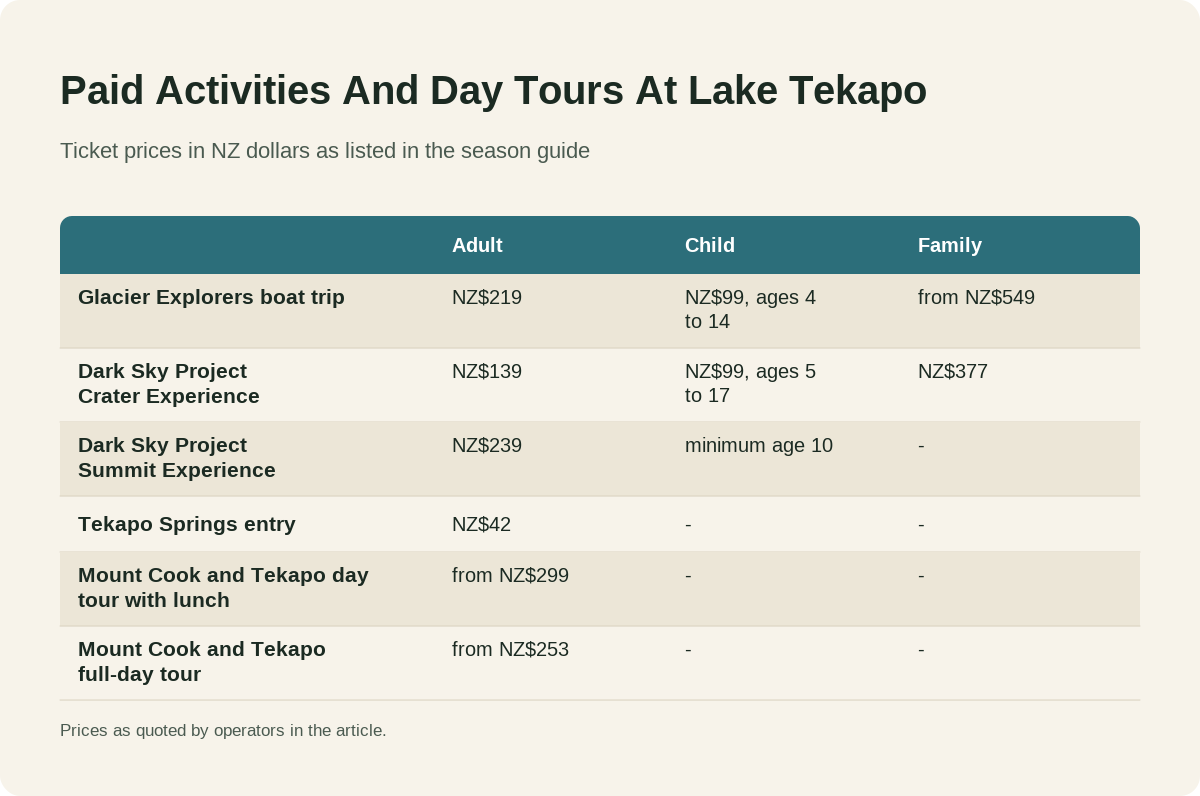
Two paid attractions and one free walk shift with the calendar beyond the headline dates. The Dark Sky Project stargazing runs year-round but Tekapo's clearest nights cluster in the colder months, Tekapo Springs keeps steady hours with adult entry at NZ$42, and the Hooker Valley Track moves from an easy three-season walk to a winter mountaineering route. None of the paid attractions at Tekapo close for winter.
The stargazing case is the quiet argument for a cold-month visit. The Dark Sky Project Crater Experience costs NZ$139 per adult and NZ$99 for children 5 to 17 for 75 minutes, with a family ticket at NZ$377, and its Summit Experience on Mount John costs NZ$239 with a minimum age of 10. Winter nights are longer and often clearer over the Mackenzie, which is why the stargazing season and the snow season happily coexist. Note that most Christchurch day tours return well before dark in any month, so stargazing means an overnight stay in Tekapo rather than a day trip add-on, a trade-off worth weighing before you commit to 13 hours on a bus.
For a soak rather than a summit, Tekapo Springs charges NZ$42 per adult, NZ$37 for students and seniors, and NZ$25 for children 3 to 15, with a family pass at NZ$112, open weekdays 11 am to 7 pm and weekends 10 am to 7 pm. The pools are a winter favourite, and they pair naturally with a snow-scenery visit in the shoulder months when the lakefront is quiet and the ranges are white. Summer visitors use them differently, as a late-afternoon stop on a hot day.
Here is how the paid and free add-ons stack up across the year, with the season each one needs.
| Activity | Adult price | Child price | Season | Source |
|---|---|---|---|---|
| Glacier Explorers boat, Tasman lake | NZ$219 | NZ$99 (4-14) | About September to mid-June, closed July and August | Operator |
| Dark Sky Project Crater Experience, 75 min | NZ$139 | NZ$99 (5-17) | Year-round, clearest nights in colder months | Operator |
| Dark Sky Project Summit Experience, Mount John | NZ$239 | Min age 10 | Year-round | Operator |
| Tekapo Springs hot pools | NZ$42 | NZ$25 (3-15) | Year-round, weekdays 11 am-7 pm | Operator |
| Hooker Valley Track | Free | Free | Open year-round, alpine gear in winter | DOC |
The practical takeaway across all of these is that the calendar, not the price, is the thing to get right. Tour prices on this route sit between NZ$253 and NZ$299 per person across the main year-round operators, and that spread barely moves with the season, so choosing December for lupins or September for snow costs little more than a February date. The expensive mistake is arriving in the second half of July expecting both a glacier boat ride and a lupin meadow, when the first is closed for the season and the second is five months away.
For readers comparing formats rather than dates, the small-group Mount Cook and Tekapo tour runs from NZ$299 per person and is rated 4.8 across 242 reviews, trading a lower per-head price at the value end for a smaller vehicle and a guide with more time per guest. Whichever you choose, the date decision comes first.
That leaves the honest bottom line. December's first two weeks for flowers, February and March for the most reliable mountain views, and September to November for snow on the peaks without the winter road risk, each with a real trade-off attached. Pick the calendar that matches what you actually want from the day, then pick the tour. Christchurch Tours exists to make that pairing simpler, with every option on the route compared in one place.
Common Questions About Lake Tekapo Seasons
When do the lupins bloom at Lake Tekapo?
From late November to mid-December, with the peak generally in early to mid-December. By early January the lakefront display is finished for the season.
Does it snow at Lake Tekapo?
Yes. Snow and ice are possible from May to October, with June to August the core of the snow season, and State Highway 80 to Mount Cook Village can close temporarily in winter. DOC advises winter access to Aoraki Mount Cook may be limited from June to September.
What is the best month to visit Mount Cook?
Early December for peak lupins and long daylight, February or March for the most settled weather and full road access, or September to November for snow scenery on the peaks with fewer crowds. Each window trades something: December is busiest, spring weather is changeable.
Is the Glacier Explorers boat open all year?
No. It operates from about September to mid-June and closes in July and August. Adult tickets are NZ$219, children 4 to 14 are NZ$99, and the trip takes about 2 hours 45 minutes including the walk to the lake.
Can you see snow and lupins at the same time?
Yes, briefly. In early December the lupins bloom while the highest peaks above Tekapo and Mount Cook still carry spring snow, which is one reason that fortnight is the most photographed of the year.